
Reptile Shipping Guide
Reptile Shipping
Boxes: Choosing
the Right Setup
The right box setup for live reptile shipping is EPS foam liner inside a corrugated outer box — sized for the species, sealed properly, and marked with live animal indicators. Learn how to choose and assemble it correctly.
Box Setup at a Glance
The Right Box Setup
A Live Reptile Needs an EPS Foam Liner Inside a Corrugated Outer Box — Sized for the Species
The packaging setup for a live reptile shipment is not a single box — it is a two-layer system. The outer layer is a corrugated cardboard box, ideally double-wall, that provides structural protection during handling and transit. The inner layer is an EPS (expanded polystyrene) foam liner that provides thermal insulation — keeping heat packs warm in winter and cool packs cold in summer — and cushions the interior from physical shock.
Sizing this two-layer system correctly is one of the most consequential packaging decisions you make. Too large a setup increases dimensional weight and therefore label cost. Too small a setup compromises animal safety by not leaving room for proper containment, thermal management materials, and safe positioning. The goal is the smallest setup that safely fits the species, its inner containment vessel, and any heat or cool pack required for the season.
The outer corrugated box must fit the EPS liner snugly, with minimal gap between liner and box walls. A loose fit allows the liner to shift during transit, creating gaps where temperature regulation is lost. A tight fit means the corrugated box and the foam liner work together as a unit — structurally and thermally.
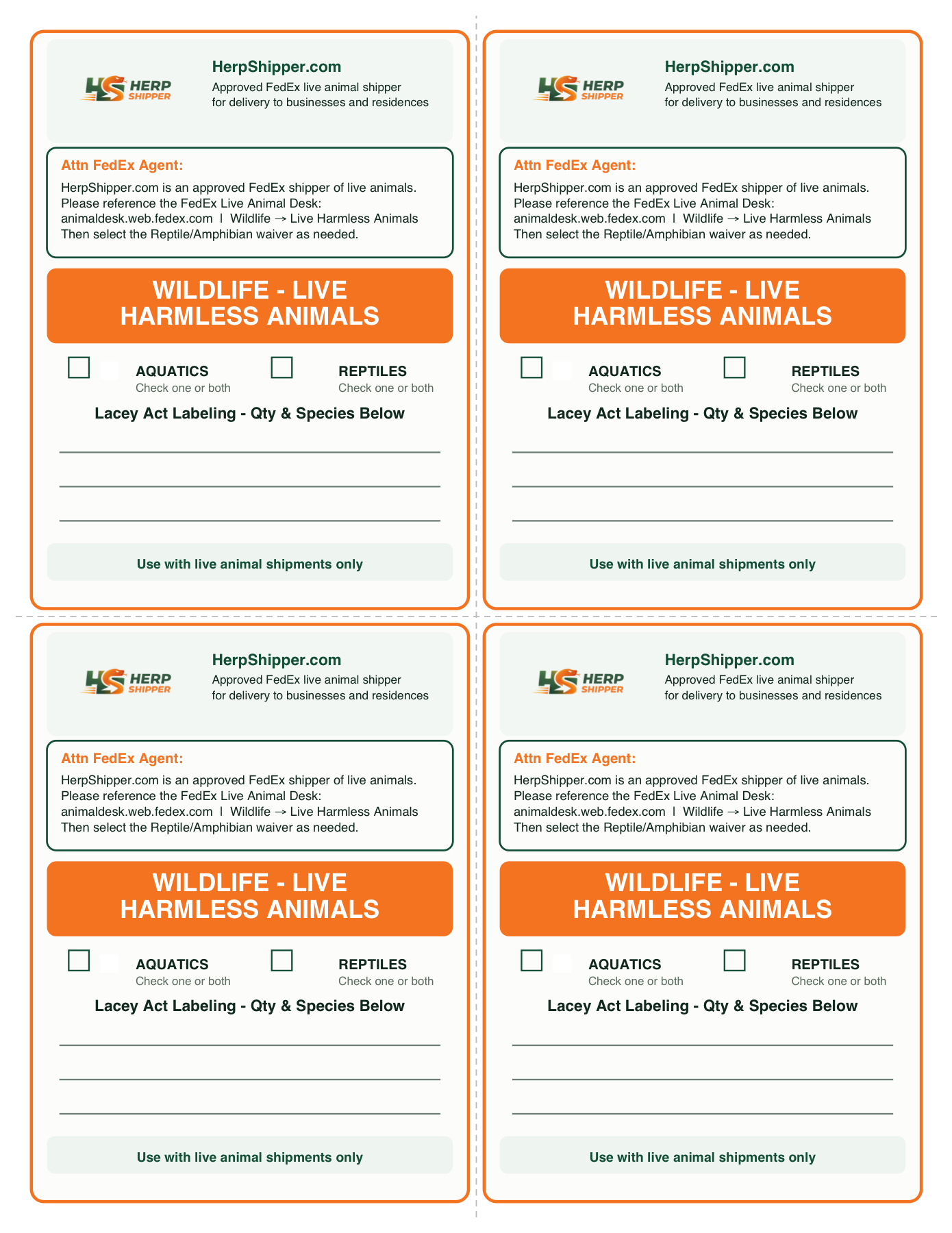
FedEx also requires specific external markings on the outer box for live animal shipments. 'LIVE HARMLESS REPTILE' must appear visibly on the exterior. Orientation arrows ('THIS SIDE UP') help handlers throughout the sort facility maintain the correct package orientation. These markings must be applied to the outer corrugated box before the package is dropped off at the Ship Center.
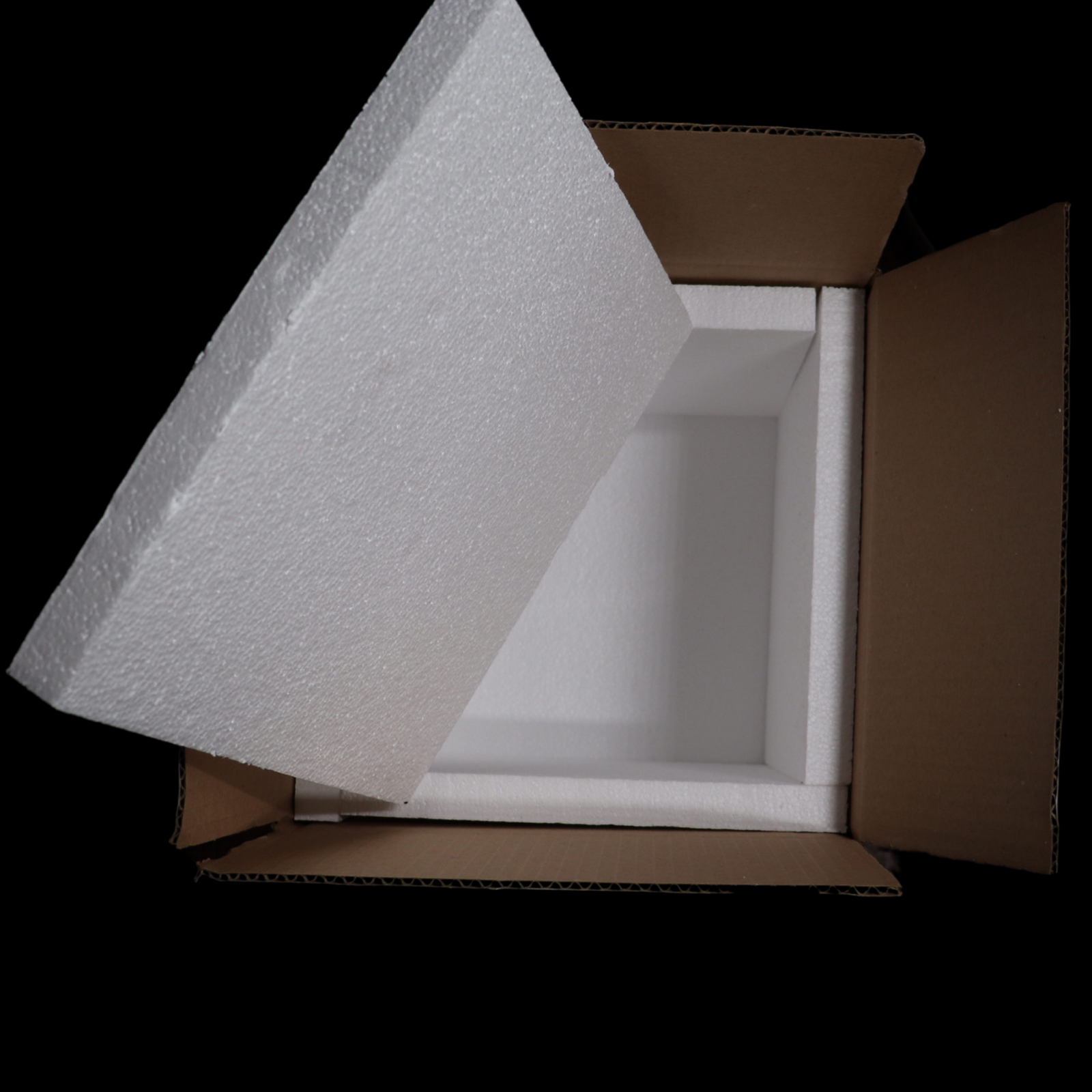
Double-Wall Corrugated Is Standard
Double-wall corrugated provides better crush resistance than single-wall during the stacking and handling that happens in a FedEx sort facility.
EPS Foam Thickness Matters
A minimum of 1.5-inch foam walls on all sides provides meaningful insulation. Thinner foam provides inadequate thermal management.
Tight Fit Between Liner and Box
The EPS liner should fit snugly inside the outer box with minimal movement. Gaps compromise both structure and thermal performance.
External Markings Are Required
FedEx harmless-reptile guidance calls for visible LIVE HARMLESS REPTILE marking on two sides of the outer box, with species and quantity details when required; the shipping label alone is not enough.
Box Size Guide
Choosing the Right Box Size for Your Species
Tap each size category to understand what it is appropriate for.
Appropriate for small snakes, small lizards, dart frogs, and similar small animals.
A small foam liner (approximately 8x6x5 interior) inside a small corrugated box is appropriate for most juvenile snakes, adult dart frogs, small geckos, and similar small-bodied species. This setup has a low dimensional weight and keeps cost down while providing adequate insulation and room for a small deli cup and cool or heat pack.
Appropriate for ball pythons, corn snakes, most commonly shipped reptiles.
A medium foam liner (approximately 12x9x6 interior) is the most commonly used setup for reptile shipping. It comfortably fits a medium deli cup or cloth bag, a 16oz cool or heat pack, and an adult ball python, corn snake, or similar medium-bodied species. This is the workhorse setup for most reptile shippers.
Appropriate for larger boas, large monitors, large tortoises, and multi-animal shipments.
A large foam liner for a large outer box accommodates larger animals or multiple animals in separate containers. The dimensional weight of a large setup can be significantly higher than actual weight — confirm the billable weight before purchase and ensure the size is genuinely required for the animals being shipped.
Sometimes necessary for unusually shaped species.
Some species — particularly long, thin snakes or large flat tortoises — may require non-standard box dimensions. Custom-cut foam or specialty reptile shipping boxes address these cases. When using a non-standard box, calculate dimensional weight carefully as irregular dimensions can create surprisingly high billable weights.
Using a box larger than needed inflates dimensional weight and label cost without improving safety.
The temptation to use a large box 'for extra safety' is understandable but counterproductive. A ball python in a medium container in a large box is not safer than in a properly fitted medium setup — and the large box's dimensional weight may add $15-30 to the label cost. Right-size for the species.
Box Assembly Checklist
Follow this sequence for every reptile shipment. 0 of 10 ready
EPS Foam Liner Selection
What to look for when choosing an insulated foam liner.
- 📦Wall thickness
Minimum 1.5-inch walls on all six sides. Thicker walls provide better insulation for extreme weather shipments.
- 📐Interior dimensions
Confirm the interior fits the animal's container, the heat or cool pack, and leaves no large air gaps.
- 🔒Lid closure
The liner lid should close securely with a tight friction fit — no light gaps, no loose lid that can shift in transit.
- ♻️Reuse carefully
Foam liners can be reused if undamaged and clean. Check for compression or cracking — a compressed liner provides less insulation.
- 🏷️Purpose-built for reptile shipping
Generic coolers are not identical to purpose-built reptile shipping liners — the wall thickness and lid design matter.
External Markings Required
What must appear on the outer corrugated box.
- 🏷️LIVE HARMLESS REPTILE — required
Apply to at least two sides of the outer box in a visible, legible location.
- ⬆️THIS SIDE UP — standard
Orientation arrows on two or more sides help handlers maintain correct positioning.
- 📋Label placement
Shipping label should be flat, fully attached, and readable. No tape over barcodes.
- ❌Remove old labels
Cover or remove any previous shipping labels on reused boxes to prevent routing errors.
- ✅Pre-printed stickers
Pre-printed LIVE HARMLESS REPTILE stickers are available from shipping supply vendors and are more legible than hand-written markings; add common/scientific name and quantity where required.
The Full Guide
Reptile Shipping Boxes: A Complete Guide to the Right Setup
The two-layer system: why one box is not enough
A single corrugated box provides structural protection but almost no thermal insulation. In an overnight FedEx shipment, the package will move through multiple sort facilities, sit in trailers, and be handled by drivers — all under varying temperature conditions. Without the EPS foam liner, a heat or cool pack inside a plain cardboard box has almost no thermal retention. The package interior temperature will closely track the ambient environment.
The EPS foam liner changes this equation. Expanded polystyrene is an effective thermal insulator — it slows heat transfer significantly. A properly sized foam liner inside a corrugated outer box maintains interior temperatures within a safe range for the duration of an overnight shipment, even when ambient temperatures outside the box are extreme. The two layers together — structural protection from the corrugated, thermal protection from the foam — are what makes the system work.
Choosing the right outer corrugated box
The outer box should be double-wall corrugated for reptile shipments. Double-wall corrugated has two layers of fluted paper between three layers of liner board, providing significantly better crush resistance than single-wall. During transit through FedEx sort facilities, packages are stacked, sorted, and moved by conveyor — a flimsy outer box can be crushed under the weight of other packages, compressing the foam liner inside and compromising both structure and thermal performance.
The outer box should fit the EPS foam liner with a snug, secure fit. If you slide the foam liner into the outer box and it moves freely, the box is too large. The liner should fit with light friction — just snug enough to not shift during transit. If the liner is too tight to fit, the box is too small. Most reptile shipping supply vendors sell matched pairs of outer boxes and foam liners sized to fit together correctly.
EPS foam liner: wall thickness, interior dimensions, and lid fit
The EPS foam liner is the most important component of the packaging system for thermal management. The wall thickness — how thick the foam is on each of the six sides — directly determines insulation effectiveness. A liner with 1.5-inch walls is the practical minimum for live reptile shipments. Liners with 2-inch walls provide meaningfully better insulation for summer and winter shipments in extreme conditions.
Interior dimensions determine what fits inside. The liner interior must comfortably accommodate the animal's containment vessel (deli cup, cloth bag, or hard container), the heat or cool pack for the season, and any additional cushioning. A liner that barely closes with the contents inside has too little space — the lid creates pressure on the contents and may not provide an adequate seal. Leave some room for the lid to close without forcing.
Inner containment: choosing the right vessel for the species
Inside the EPS foam liner, the animal travels in inner containment appropriate to the species. Snakes should be in a breathable cloth reptile bag or pillowcase-style snake bag, with the opening secured by a knot, zip tie, or bag tie so it cannot loosen. Small geckos, frogs, and many small lizards should be in a ventilated deli cup with the lid secured without covering the air holes. Larger lizards may need a rigid, species-appropriate container. The point is the same for every animal: it cannot escape, and it cannot move freely inside the foam liner.
Ventilation must match the species without creating an escape route. Secure deli-cup lids with tape or bands around the rim while keeping air holes open. Secure snake bags with a knot, zip tie, or bag tie; do not trust a loose drawstring by itself. Then use crumpled paper or other clean fill around the cup or bag so it rests in a stable nest instead of sliding against the liner walls or thermal pack.
Thermal management: heat packs and cool packs in the box
The heat or cool pack is placed inside the EPS foam liner but not in direct contact with the animal's containment vessel. For heat packs, position the pack against one inner wall of the liner, with the animal container on the opposite side. Heat radiates through the liner interior and maintains a uniform temperature. Direct contact with a heat pack surface can overheat the animal.
For cool packs, the same positioning logic applies — against one wall, not directly touching the animal's container. A cool pack that is too cold can cause cold stress if it is in direct contact with a species that is sensitive to cool temperatures. The foam liner's insulation and the air space inside the liner moderate the temperature so the pack's effect is distributed rather than concentrated at one point of contact.
Dimensional weight and the cost of box size
The billing weight for your FedEx label is the greater of actual weight or dimensional weight (L×W×H÷139). For live reptile setups, which are often bulky relative to the weight of the animal, dimensional weight frequently equals or exceeds actual weight. A 14x14x14 outer box has a dimensional weight of nearly 20 lbs — if the actual packed weight is 8 lbs, you pay for 20 lbs.
Right-sizing the box is the most effective way to manage shipping cost without compromising safety. For a ball python going into a medium foam liner inside a medium corrugated outer box, the dimensional weight may be 8-10 lbs — much closer to actual weight than the same animal in an oversized box. Run the dimensional weight calculation for your typical species setups and know your billable weight before arriving at the Ship Center.
Reusing boxes: when it is safe and when it is not
Reptile shipping boxes can often be reused if they are undamaged and clean. The outer corrugated box can be reused if it has no crushed corners, no delamination of the corrugated walls, no moisture damage, and no previous shipping labels that are not fully covered. A box with crushed walls has lost significant crush resistance and should be retired.
The EPS foam liner can be reused if the foam has not been compressed or cracked. Compressed foam — which you can identify by pressing on the walls and comparing the resistance to a new liner — provides less insulation than intact foam. A liner that has been used many times and shows visible compression on the walls should be replaced. Keeping a stock of fresh liners ensures you never compromise thermal performance to save on packaging cost.
Where to buy reptile shipping boxes and supplies
Purpose-built reptile shipping supplies — EPS foam liners, double-wall corrugated outer boxes, deli cups, snake bags, heat packs, and cool packs — are available from specialized reptile shipping supply vendors. These vendors sell matched liner-and-box pairs sized to fit together correctly, which is easier than trying to match box and liner separately. Pre-printed LIVE HARMLESS REPTILE stickers are also available from these vendors.
HerpShipper's supplies page provides access to the packaging materials that work correctly together for live reptile shipments — liners, boxes, and accessories selected for the live animal shipping context rather than generic shipping supply stores where the specific thermal performance and sizing for reptile packages may not be available.
Plan Ahead
Box Prep Timeline
Have your packaging assembled and ready before shipping day.
- BEFOREConfirm outer box and foam liner are undamaged
- BEFOREPrepare inner containment for species
- PACKPlace animal in inner containment
- PACKAdd heat or cool pack positioned in liner
- PACKClose foam liner lid securely
- SEALTape corrugated box + apply all markings
- FIRSTMeasure outer box L×W×H
- FIRSTCalculate dim weight (L×W×H÷139)
- FIRSTConfirm liner fits snugly in outer box
- FIRSTConfirm interior fits species + pack + container
- FIRSTDo a trial pack before shipping day
- CHECKOuter box: no crushed corners or moisture
- CHECKFoam liner: walls not compressed — push test
- CHECKNo old labels that could cause routing errors
- CHECKInner containment clean and secure
- OKReuse if all pass — replace any that fail
What to Avoid
Common Reptile Shipping Box Mistakes
Using a plain cardboard box without EPS foam liner
A cardboard box alone provides no meaningful thermal insulation. EPS foam is required for live reptile shipments.
Box too large for the foam liner
A loose-fitting liner shifts in transit, creating gaps and reducing both structural and thermal performance.
Foam liner too thin — under 1.5 inch walls
Thin foam provides inadequate insulation. Use liners with at least 1.5-inch walls, thicker for extreme weather.
No LIVE HARMLESS REPTILE marking on outer box
FedEx requires visible LIVE HARMLESS REPTILE markings on the exterior of the box. The shipping label alone is not sufficient.
Placing heat or cool pack directly against the animal
Direct contact with a heat or cool pack can overheat or over-cool the animal. Always position packs against the liner wall.
Reusing a compressed or damaged foam liner
A compressed liner provides less insulation than a new one. Inspect liners before reuse and replace any that show wear.
Get the Right Reptile Shipping Supplies and Overnight Labels
HerpShipper provides access to reptile shipping supplies and discounted FedEx overnight labels — everything you need for a safe, properly packaged shipment.